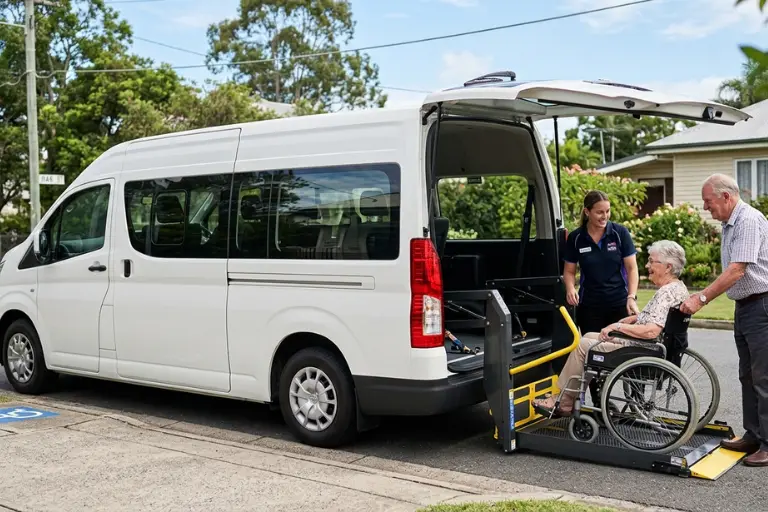
Getting to a job interview, a physio appointment, or Sunday lunch with family shouldn’t depend on whether someone else is free to drive. Yet for a lot of NDIS participants, that’s exactly what happens when public transport isn’t a safe or realistic option. This is the gap NDIS Transport Funding was built to close.
Below is an up-to-date walkthrough of who qualifies for this funding, how much you could receive, and how the money actually reaches your bank account.
What Is NDIS Transport Funding?
Transport funding, sometimes called the transport allowance, is money included in a participant’s plan to help cover the cost of getting around when disability makes public transport unsafe, inaccessible, or simply not workable.
It sits inside your Core Supports budget, and in most current plans it appears as Recurring Transport, one of the four support budget categories the NDIS uses (alongside Core, Capacity Building, and Capital supports). It’s a “stated” or quarantined amount, meaning it’s set aside specifically for transport and can’t be redirected to pay for other supports.
Who Is Eligible for Transport Funding?
Eligibility comes down to one central question the NDIA will ask during planning: can you use public transport safely and independently? If your disability makes that difficult, unsafe, or impossible, you have a reasonable case for funding.
The NDIA typically looks at a few things:
- Whether physical, sensory, cognitive, or psychosocial barriers stop you from catching a bus or train without support
- Whether family, carers, or your community network can reasonably help with some of your travel
- What your goals are? Is it work, study, therapy, or simply getting out into the community more often
- Whether a taxi subsidy scheme in your state already covers part of your travel costs
Be specific in your planning meeting: Rather than saying “I need help getting around,” explain exactly what stops you from catching public transport and where you need to travel to reach your goals. A support coordinator, Local Area Coordinator (LAC), or an experienced transport provider can help you put this case together clearly.
What If I Can Sometimes Use Public Transport, Just Not Always?
You don’t need to be completely unable to use public transport to qualify. Plenty of participants can manage some trips independently but struggle on others, for example, during sensory overload, fatigue, or unfamiliar routes. The NDIA can still fund a level of support that reflects your actual, day-to-day reality rather than a best-case scenario.
NDIS Transport Funding Levels Explained
Once you’re assessed as eligible, your funding is set at one of three NDIS transport funding levels.
| Level | Who it’s generally for | Typical annual amount |
| Level 1 – Community Access | Not currently working, studying, or attending a day program, but needs support to get out into the community | Around $1,784 per year |
| Level 2 – Part-Time Work, Study or Programs | Working or studying up to 15 hours a week, or regularly attending day programs and social or recreational activities | Around $2,676 per year |
| Level 3 – Full-Time Work or Study | Working or studying 15 or more hours a week, or actively job-seeking on a full-time basis | Around $3,456 per year |
Note: In exceptional circumstances where a participant faces extremely high mobility requirements or specialised work demands, the NDIA may approve funding above Level 3.
Transport support can also show up elsewhere in your plan: Core Supports if a worker drives you, Capacity Building if you’re learning to travel independently, or Capital Supports for vehicle modifications like a hoist or ramp.
How Is NDIS Transport Funding Paid?
Unlike most Core Supports, which you claim after paying a provider, transport funding usually works differently:
- It’s typically paid as a regular fortnightly instalment, deposited directly into your nominated bank account.
- If you’re plan-managed, your plan manager may handle this on your behalf.
- If you’re agency-managed, payments are generally made automatically through the NDIS system.
- You use this money as you see fit within the transport category; there’s no need to submit an invoice every time you take a taxi.
Because the transport fund is paid proactively rather than reimbursed later, it genuinely functions more like a regular allowance than a claimable expense. That’s a deliberate design choice; the NDIA wants participants to have the money available upfront, before the trip, not weeks later.
What Can Transport Funding Actually Cover?
Once it’s in your account, transport funding can go toward:
- Taxis and rideshare services (Uber, Ola, and similar)
- Community transport or accessible vehicle services
- Door-to-door or scheduled transport
- A support worker driving you to an activity or appointment (activity-based transport, billed separately by your provider)
What Transport Funding Won’t Cover
Transport funding generally can’t be used for:
- Fuel, tolls, or general running costs for your own private car
- Tips for drivers or parking fines
- Overseas or interstate holiday travel
- School transport (the education system is responsible for)
- Paying an informal support such as a parent, partner, or friend to drive you around
Transport Funding vs Travel Allowance for Support Workers
It’s easy to mix these two up, so it’s worth separating them clearly.
Your personal transport funding pays for your own trips: the taxi that gets you to work, the rideshare that gets you to a medical appointment.
A support worker’s travel allowance is a different, separate cost: when a worker drives you somewhere as part of a support session, their time is generally billed through your Core Supports or Social and Community Participation budget, and reasonable travel expenses such as tolls, parking, or a per-kilometre rate (commonly around $0.97 per kilometre) may also apply, depending on your service agreement.
Understanding this distinction matters because it affects which part of your budget is being drawn down, and it helps you ask the right questions when comparing quotes from different providers.
Putting Your Funding to Work
Once your funding is in place, the practical question becomes how to use it well.
Most participants use a mix of NDIS transport services: a taxi subsidy card for everyday trips, rideshare apps for flexibility, and a support worker’s vehicle when the trip is part of a broader activity, such as a shopping outing or a community group.
Important: If you’re in a state with a taxi subsidy scheme, it’s worth applying for one alongside your NDIS funding. The two work well together: your state subsidy reduces the fare, and your NDIS transport allowance covers the rest, stretching your annual amount much further across the year.
How Do I Apply for or Request Transport Funding?
Transport funding isn’t automatically included in every plan; you need to raise it directly during your planning or plan review meeting. Here’s how:
Explain Functional Impact: Clearly detail how your disability affects your ability to travel independently or use public transit.
Connect to Your Goals: Show how travel funding enables specific outcomes such as working, studying, attending appointments, or socialising.
Gather Evidence: Submit reports or supporting letters from health professionals (such as an OT, GP, or Support Coordinator).
Specify Travel Details: Provide an estimate of your weekly trips and distances to help the NDIA determine your funding tier.
Note: If your travel needs increase during your plan period, such as taking on a new job or additional study, you can request an early plan review at any time.
Choosing the Right NDIS Transport Provider
When it comes to choosing an NDIS transport provider, look past the price per kilometre and consider:
- Reliability: do they consistently arrive on time for appointments that genuinely matter?
- Accessibility: can they accommodate wheelchairs, mobility aids, or sensory needs?
- Local knowledge: do they understand your area well enough to plan sensible routes?
- Communication: will they let you know early if something changes?
A provider who genuinely understands your goals, not just your pickup address, makes an enormous difference to how confidently you can plan your week.
Talk to AAYDS® About Your Transport Support
At AAYDS®, we’ve supported participants throughout Moreton Bay, including Caboolture, Redcliffe, and North Lakes, to access the transport assistance included in their plans and make it work in everyday life, whether that’s a regular trip to work, transport to a community group, or dependable, considerate travel to medical appointments.
If you’re uncertain about your eligibility, unsure which level suits your circumstances, or simply need a transport provider who knows the NDIS thoroughly, we’re ready to support you.
Get in touch with our team to talk through your NDIS transport services and how we can support your independence, or submit a participant referral if you’re a support coordinator, family member, or allied health professional referring someone into our care.

Allison Cosgrove
Hi, I'm Allison Cosgrove, Founder and Director of AAYDS (All About You Disability Support). I have over 15 years of experience in disability support and hold a Diploma in Individual Support. I'm passionate about helping NDIS participants, families, and carers access personalised, high-quality support that promotes independence and wellbeing.